
Understanding sweet bonanza casino win potential requires more than looking at a headline multiplier. The result depends on the loaded game configuration, stake selected, feature settings and the controls provided by the casino account. The slot’s rules explain how combinations, tumbles and Free Spins work, while the operator determines important account conditions around limits, records and access. For Canadian adults, checking those details before playing creates a clearer picture of what the game can and cannot offer.

Start with the configuration shown in the game window
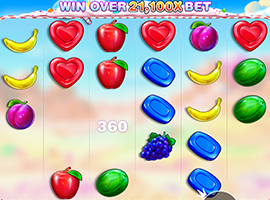
The first practical step is to open the information panel inside the loaded slot rather than relying on a general description found elsewhere. The original version uses a 6×5 grid and a Pay Anywhere system. A win requires at least eight matching symbols anywhere on the screen, while larger matching groups can produce higher awards. The relevant paytable, stake range and return setting should all be visible through the game information menu.
Published versions of the slot have included RTP configurations around 96.48% to 96.51%, but that does not guarantee that every casino loads the same setting. The operator may enable a different configuration, and the figure that matters is the one attached to the specific game session. RTP is a long-term statistical measure, not a forecast for one spin, one visit or one player.
The maximum-win figure also needs careful interpretation. The documented original version has potential of around 21,000 times the stake, although published figures can vary slightly between configurations. That is a ceiling describing an exceptional outcome, not a typical result or an expected return. Checking the in-game rules helps distinguish the version being offered from similarly named later releases.
How do tumbles and multipliers shape the possible result?
The central mechanic is the Tumble feature. When a winning group is removed, symbols above it fall into the empty spaces and new symbols enter from above. If another qualifying group forms, the process continues on the same paid spin. Several wins may therefore build during one sequence, but the next tumble is never guaranteed simply because the previous one produced a result.
Regular wins are based on the number of matching symbols rather than their exact position. Eight or nine matching symbols form the lowest qualifying combination, followed by larger award levels for 10–11 and 12 or more. Multiple wins formed within one tumble sequence are added together before the game checks whether the sequence should continue.
Multiplier bombs appear during the built-in Free Spins feature rather than ordinary base-game play. Each bomb can carry a random value from 2x to 100x. Bombs remain until the current tumble ends, then their values are added and applied to that sequence’s win. This explains why the advertised win potential is much higher than the ordinary symbol awards, but it also means the largest outcomes depend on several uncommon events aligning.
Choose feature settings only after weighing their trade-offs
Some versions include an Ante Bet or Double Chance-style option. In the documented configuration, the stake rises by 25% and the chance of triggering Free Spins naturally is doubled by adding more Scatter symbols to the reels. This option changes the cost of every spin, so a higher feature frequency does not automatically mean better value or a greater chance of finishing ahead.
The same setting can disable the Free Spins purchase option. Where permitted, Bonus Buy can purchase the 10-spin round for 100 times the selected base bet, but availability depends on the operator and applicable rules. A purchase price of that size can expose a session to a large single decision, particularly when the selected stake is already high.
Before using either option, compare the extra cost with the purpose of the session. A player interested in ordinary volatility may prefer the base game, while someone specifically examining the bonus mechanics may consider a feature option where it is available. Neither choice changes the fact that outcomes are random. Read the loaded game’s terms, including whether the option changes RTP, before treating it as part of a win-potential calculation.
Use account controls to keep the calculation meaningful
Game potential is difficult to assess when stake size changes impulsively. Account-level tools can make the session easier to measure by setting a spending boundary before play begins. Available controls may include deposit limits, loss limits, session timers, cooling-off periods or self-exclusion, although the exact selection depends on the hosting casino and the rules applying in the player’s province.
Autoplay, when offered, can also affect how a session develops. Possible stop conditions may include a selected loss or profit change, a feature trigger or a single win above a chosen amount. These settings do not improve the mathematical result, but they can reduce the chance of continuing automatically after the original decision no longer feels appropriate. Players should check which stop conditions are actually available rather than assuming every implementation includes them.
For broader Canadian information about safer gambling practices and support, consult the Responsible Gambling Council’s public resources. The operator’s account page remains the source for casino-specific controls. Record the starting balance, stake, options used and ending balance if you want to review a session honestly; do not treat a short record as proof of the slot’s long-term performance.
Check records, rules and operator limits before deciding
Game History can help confirm what happened in individual rounds. The slot’s rules may provide a history view, while the casino account may hold longer session or transaction records. These records can show the stake, tumble results and feature events, but they cannot predict the next outcome. They are most useful for checking whether your experience matches the displayed rules.

Account conditions also determine practical limits around play. The casino, rather than the slot developer, controls account access, verification, payment arrangements, bonus eligibility and any provincial restrictions. If promotional funds or promotional spins are involved, wagering requirements, expiry dates, maximum-bet conditions and contribution rates may affect how winnings can be used. Those terms are separate from the built-in Free Spins feature.
Before selecting a stake or feature option, confirm the operator’s stated requirements and the information screen for the exact version. Do not assume that a Canadian-facing site offers the same currency, limits, settings or availability as another operator. A sensible decision combines the displayed RTP and maximum potential with a fixed budget, a clear understanding of the mechanics and acceptance that the upper limit is not a likely outcome.
Questions players commonly ask
Does the maximum win indicate what a player should expect?
No. A maximum-win figure describes the largest permitted multiplier under the relevant configuration. It does not represent an average payout, a usual session result or a probability estimate. The displayed RTP is a separate long-term statistic, and neither measure predicts the outcome of an individual spin or Free Spins round.
Can changing the stake improve the mathematical chance of winning?
Changing the stake changes the amount won or lost per result, not the underlying random outcome. An Ante-style option may alter the chance of entering Free Spins while increasing the cost of each spin. Check the loaded rules for its exact effect, and never confuse more frequent features with guaranteed profit.
Who controls limits and account settings?
The casino hosting the game controls account tools such as deposit limits, session controls, recovery procedures and self-exclusion. The slot controls its own interface settings and game rules. Availability can differ by operator and province, so review the account menu and the operator’s terms before relying on a particular control.
Recent Comments