
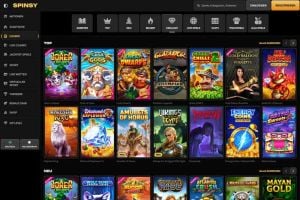
Choosing a slot becomes easier when you search by the type of experience you want rather than scrolling through an enormous lobby. The Canadian version of spinsy online casino groups games by categories, popularity, providers and themes, while many titles also offer demo play. That combination can help adult players compare formats before risking money. The aim is not to predict a winning game, because no short session can do that, but to identify games whose pace, mechanics and presentation suit your preferences.

Start with the experience, not the title
A useful first step is to decide what kind of session you want. Traditional slots usually focus on reels, paylines or ways to win and a straightforward spin-by-spin rhythm. Instant games may use crash-style, multiplier or quick-result mechanics instead. Jackpot games can add a progressive or fixed prize element, while table and live-dealer games offer a very different experience from reels altogether.
The lobby’s broad categories can narrow the field before you examine individual games. Sections such as Top, New, Popular, Exclusive, Instant Games, Slots and jackpots each answer a different discovery question. “New” may suit someone who wants recently added releases, whereas “Popular” can help a player see what attracts attention across the platform. These labels are useful for browsing, but they do not mean a game is more likely to pay or better suited to every player.
Theme also matters, although it should be treated as a presentation choice rather than a quality guarantee. Adventure, mythology, fruit, fantasy, sports and feature-led themes may appeal to different tastes. Search tools are most useful when combined: begin with a game type, add a provider or category filter, then inspect the individual title’s information. This avoids choosing solely because a thumbnail looks attractive or a familiar character appears on the screen.
Which slot mechanics deserve a closer look?
Once a game catches your attention, examine how its main features work. Free-spin rounds, expanding symbols, wilds, scatters, cascading wins and bonus picks can create more variety than a basic reel layout. Some games use a fixed number of paylines, while others use “ways” systems or cluster mechanics. The difference affects how wins are formed, so the help panel is worth reading before making a decision.
Volatility is another practical consideration, but it should not be confused with a prediction. A higher-volatility game may produce less frequent winning outcomes with more pronounced swings, while a lower-volatility design may produce smaller or more regular results. Neither option removes the house edge, and neither guarantees a particular return during a short visit. If the information is not clearly displayed, do not guess from the artwork or a few early spins.
Demo play can help you understand controls, bonus triggers and the general pace without immediately using real funds. It cannot verify long-term return, establish whether a game is “due,” or demonstrate what will happen during paid play. Treat it as a familiarisation tool. Before switching to real-money play, note the stake controls, confirm the currency shown in the account and decide what amount of entertainment spending is acceptable in advance.
Can provider filters make a large lobby manageable?
Provider filters are valuable when you already know the design style you prefer. A search may reveal games from studios such as Hacksaw Gaming, Amusnet, BGaming, Booongo, Spinomenal, Yggdrasil, Amatic, Oryx, Evoplay, CT Interactive, Playson, EGT Digital, OneTouch and AvatarUX. Other listed catalogues include studios associated with table, live-dealer and game-show content, so filtering by provider can also help separate reel games from other formats.
Use the provider name as a discovery shortcut rather than a recommendation. Studios often release games with different themes, reel structures and volatility profiles, so liking one title does not mean every release from the same studio will suit you. Open the game information panel and compare the rules, available features and stake range for each title. A familiar provider logo should not replace that check.
A practical browsing routine is to make a small shortlist instead of opening dozens of games. Select two or three titles from different providers, play each in demo mode if available, and record what you actually prefer: slower or faster pacing, simple or feature-heavy rounds, and a clean or busy interface. This reduces impulsive switching and gives you a clearer basis for choosing one game for a limited session.
How should jackpots, live games and instant games be compared?
These categories should not be judged by the same criteria as ordinary slots. Jackpot games may be attractive because of their prize structure, but the chance of a large payout does not make the game more predictable. Check whether the jackpot is fixed or progressive, what triggers it and whether the game’s rules distinguish between different prize levels. Avoid assuming that a larger advertised prize means better value.
Live casino offers another type of interaction, with streamed tables and a human dealer rather than a conventional slot interface. Roulette, blackjack, baccarat, poker and game-show formats can be found in this area. They may appeal to players who prefer visible rounds and table rules, but they can also move quickly and encourage longer sessions. Read the specific game rules, including side bets, before deciding whether the format suits you.
Instant games are often designed around speed, simple decisions or rapidly changing outcomes. Their convenience can make time pass unnoticed, particularly on a mobile browser. Set a session duration before opening one, and pause if the pace begins to feel automatic. For broader information about gambling risks and informed choices, consult the Responsible Gambling Council’s public resources. The source offers general guidance, not a prediction about any particular game.
What should you check before selecting a game?
Use the game’s information screen as a final checkpoint. Look for the rules, paytable, available stake levels, bonus-feature explanations and any displayed return-to-player or volatility information. These details can vary by title, and they are more useful than a promotional label such as “hot,” “exclusive” or “trending.” If a key detail is missing or unclear, choose another title or ask support before committing funds.
Next, match the game to a defined entertainment budget. Decide the maximum amount and time for the session, then avoid increasing either limit to recover a loss. A demo result, previous win or near miss does not change the probability of the next outcome. Promotions, rewards and challenges can also encourage extra play, so check their conditions separately rather than allowing a bonus label to determine your game choice.
Finally, keep discovery separate from chasing. A sensible shortlist might contain one familiar slot, one new release and one alternative such as an instant or jackpot game. Compare them on rules, pace and personal enjoyment, not on promises of profit. If gambling stops feeling recreational, stop the session and use the operator’s available support or self-exclusion process instead of continuing to search for a better result.
Frequently asked questions about choosing slot games
Does demo play show which slot will pay?
No. Demo play can explain controls, symbols and bonus rounds, but a short sample cannot establish a game’s long-term return or predict future results. Use it to decide whether the pace and mechanics are comfortable. Move to real-money play only with a predetermined entertainment budget and time limit.
Are popular slots better than new releases?
Popularity is a browsing signal, not proof of better value, fairness or winning chances. New releases may offer unfamiliar mechanics, while popular titles may have a style many players already recognize. Compare each game’s rules, features, stake range and volatility information instead of relying on its position in the lobby.
Should I choose a slot by provider?
A provider filter can make a large catalogue easier to explore, especially if you recognize a studio’s usual visual style or mechanics. However, one provider can publish games with very different rules and volatility. Treat the provider as a starting point, then assess the specific title before choosing it.
Recent Comments